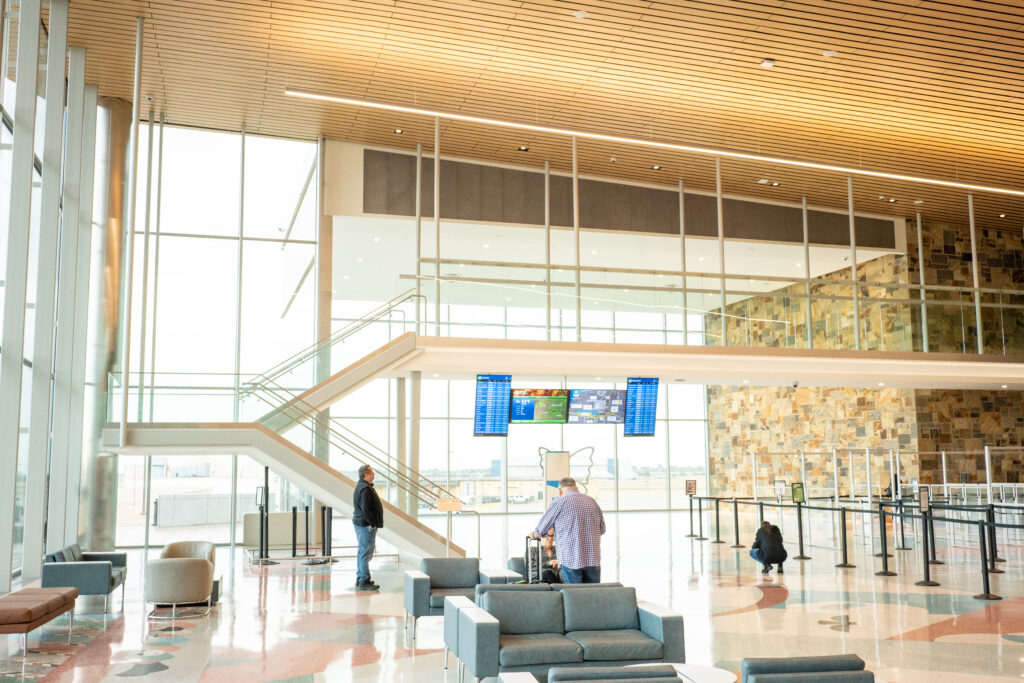
The Transportation Security Administration (TSA) has begun the installation of state-of-the-art Advanced Imaging Technology (AIT) machines at Will Rogers World Airport’s (WRWA) security checkpoints. These machines are highly effective in detecting potentially dangerous items that a passenger may be carrying, including weapons and explosives.
The AIT machines being installed at WRWA use millimeter wave technology; harmless electromagnetic waves that safely detect potentially dangerous items. These machines do not display specific images of a passenger’s body, only a generic outline of a person and there are no separate rooms where screeners view images.
AIT is just one of several technologies that TSA utilizes in the checkpoint screening process. Imaging technology automatically detects potentially dangerous items a passenger may be carrying, including weapons and explosives. AIT screening is currently used in 140 airports across the country.
What to expect
The procedure for travelers using the AIT is simple: the passenger steps into the imaging portal, stands in position for a few seconds while the machine creates an image, then steps out. Should the machine detect an item concealed under a passenger’s clothing, the machine generates a generic image, similar to a gingerbread man, with a box around the area of concern. At that point, a TSA officer determines if additional screening is needed. If the machine detects no anomalies, a green box with the words “OK” appears on the screen. The entire process is conducted in the presence of the passenger.
The biggest difference passengers will notice with the new machines is preparing for AIT screening. Prior to entering the machine, a person must remove all items from pockets and jackets, as well as accessories such as shoes, belts, and bulky jewelry. Any item, such as a wallet left in a back pocket, will show up as an anomaly on the machine and may cause the passenger to have additional screening.
The millimeter wave technology meets all known national and international health and safety standards. The screening is safe for all passengers, including children, pregnant women, and individuals with medical implants. AIT screening is optional; however, if a passenger chooses not to use the machine, they will receive alternative screening, including a physical pat-down.
For more information visit the TSA website.